App
App
PDF Version - Count to Pentecost Audio
by Fred R. Coulter
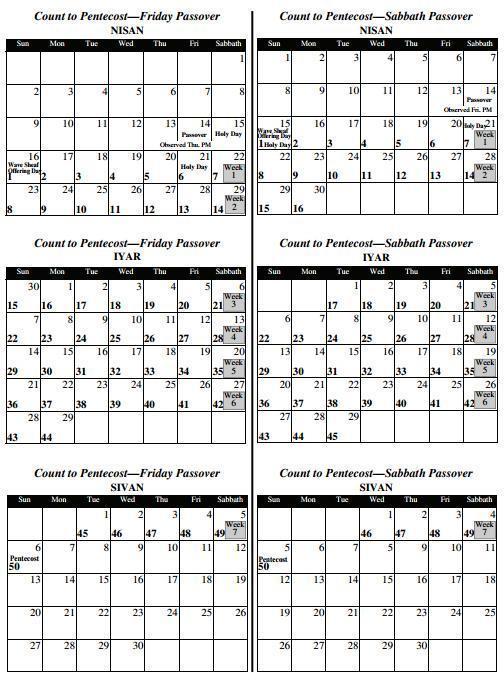
In counting to Pentecost, it is crucial to first determine the correct day on which to begin the fifty-day count. According to Scripture, we are to count “from the morrow after the Sabbath”—the weekly Sabbath. In certain years, however, Nisan 14 (the Passover day) falls on a weekly Sabbath, resulting in no weekly Sabbath between the first holy day (Sunday) and the last holy day (Saturday) of the Feast of Unleavened Bread. Thus, there has been confusion as to which Sabbath should be used in determining the “morrow after the Sabbath” from which to begin counting. This booklet reveals the biblical answer to this dilemma and explains how to properly begin the fifty-day count to Pentecost.
CHAPTER ONE
The Scriptural Count to Pentecost
The scriptural instructions for counting to the day of Pentecost, or the Feast of Firstfruits, are recorded in Leviticus 23: “Speak unto the children of Israel, and say unto them, ‘When you be come into the land which I give unto you, and shall reap the harvest thereof, then you shall bring a sheaf of the firstfruits of your harvest unto the priest: and he shall wave the sheaf before the LORD, to be accepted for you: on the morrow after the Sabbath the priest shall wave it.... And you shall count unto you from the morrow after the Sabbath, from the day that you brought the sheaf of the wave offering; seven Sabbaths shall be complete: even unto the morrow after the seventh Sabbath shall you number fifty days.... And you shall proclaim on the selfsame day, that it may be an holy convocation unto you’ ” (verses 10-11, 15-16, 21, KJV).
From The Holy Bible In Its Original Order, these verses read: “Speak to the children of Israel and say to them, ‘When you have come into the land which I give to you, and shall reap the harvest of it, then you shall bring the premier sheaf of the firstfruits of your harvest to the priest. And he shall wave the sheaf before the LORD to be accepted for you. On the next day after the Sabbath the priest shall wave it.... And you shall count to you beginning with the next day after the Sabbath, beginning with the day that you brought the sheaf of the wave offering; seven Sabbaths shall be complete; even unto the day after the seventh Sabbath you shall number fifty days. And you shall proclaim on the same day that it may be a holy convocation’ ” (Lev. 23:10-11, 15-16).
God’s instructions in Leviticus 23 make it clear that the weeks of counting must be seven full weeks, each ending with the weekly Sabbath day. The seventh weekly Sabbath will always be the forty-ninth day in the count. No other method of counting can fit the biblical command to count exactly fifty days from the day after the first Sabbath to the day after the seventh Sabbath. The only day after the weekly Sabbath is the first day of the week: “Even unto the day after the seventh Sabbath you shall number fifty days.” This command shows that the count is not only seven complete weeks—49 days—but includes one additional day, making a total of fifty days. The fiftieth day is to be proclaimed as a holy convocation. In Old Testament times, this annual holy day was called the Feast of Weeks, or the Feast of Firstfruits. In New Testament times, the name was changed to the day of Pentecost. The English word Pentecost is transliterated from the Greek word penteekostee, which means “the fiftieth.”
The instructions in Leviticus 23 show that the count to Pentecost, or the Feast of Firstfruits, begins with the Wave Sheaf Day. On this day, the wave sheaf was reaped and offered to God as the first of the firstfruits, marking the beginning of the spring barley harvest. Deuteronomy 16 confirms that the beginning of the harvest was also the beginning of the seven-week count to Pentecost: “You shall count seven weeks to yourselves. Begin to count the seven weeks from the time you first began to put the sickle to the grain. And you shall keep the Feast of Weeks to the LORD your God...” (Deut. 16:9-10).
The Wave Sheaf Day is clearly defined in Leviticus 23 as “the day after the Sabbath,” showing that it is always the first day of the week. The Hebrew ha Shabbat always means the weekly seventh-day Sabbath. On the other hand, all holy days are called Shabbat—without the definite article ha. God commands us to count “from the morrow after the Sabbath,” which in the Hebrew specifically means “beginning with the day after the [weekly] Sabbath.” (See A True Understanding of Acts 2:1 by Fred R. Coulter.)
The count does not include this weekly Sabbath. Rather, the first day in the count to Pentecost is the “day after the Sabbath”—the first day of the week (commonly called Sunday). In other words, the weekly Sabbath is the day before “the day after the Sabbath.” If a number were to be assigned to the weekly Sabbath, it would have to be numbered as day zero. As soon as this weekly Sabbath ends at sunset, the first day of the week begins—and that whole day is counted. Thus, the first day of the week, the Wave Sheaf Day, is the first day in the fifty-day count to Pentecost.
The commands in Leviticus 23 concerning the offering of the wave sheaf, and the scriptural record of the original fulfillment of these commands in Joshua five, make it clear that the Wave Sheaf Day is always the first day of the week during the seven days of the Feast of Unleavened Bread. (See Understanding God’s Command for the Wave Sheaf by Dwight Blevins.) Remember that the wave sheaf was the first, or premiere sheaf of the firstfruits of the spring barley harvest. It was critically important that this first sheaf of the barley harvest be offered during the Feast of Unleavened Bread. In fact, if the barley was not sufficiently ripe by the end of the year, the Passover and the Feast of Unleavened Bread were postponed one full month so that the barley could ripen. To accomplish this, a thirteenth month—called Adar II— was added to the year. Miamonides explains this required practice:
“And why is just this month added? Because of the season of the barley harvest—that is, in order that Passover be celebrated in that season. For it is said: ‘Heed the month of ripening ears [Abib] (Deut. 16:1),’ which means give heed that this month (of Nisan [as it is also called]) fall in the season of ripening ears. Without the addition of this month (of Adar [II]), however, Passover [Miamonides uses the term “Passover” in reference to the entire Feast of Unleavened Bread] would fall sometimes in the summer and sometimes in the winter.... Similarly, if the court [calendar court of the Second Temple era in Jerusalem] found that the barley crop was not yet ripe, being retarded, and that such tree fruits as usually sprout during the Passover season had not yet produced buds, it took these two conditions as a criterion and preceded to intercalate the year [by adding the month Adar II] ... in order that the barley crop might be available for the offering of the Sheaf of Waving on the 16th of Nisan [the Pharisaic Jews waved the sheaf on the morrow after the high Sabbath of Nisan 15], and in order that the fruits might sprout as usual during the season of barley harvest” (Sanctification of the New Moon, pp. 16-17, bold emphasis added).
The intercalary month of Adar II serves to fulfill God’s instructions that His feast days be observed each year “in their seasons” (Lev. 23:4). In order to obey this command of God, it is absolutely necessary to adjust the Hebrew calendar in some years by adding an extra month. Postponing the annual feasts of God in order to observe them in their proper seasons is fully scriptural and is based on the direct commands of God—and should never be condemned as an unscriptural tradition of Pharisaic Judaism.
While the Pharisaic Jews understood the necessity to observe God’s feasts in their appointed seasons, they were not faithful to all of God’s instructions concerning His feast days. Their failure is most evident in their departure from the biblical command to keep the Passover at the beginning of Nisan 14, and in their adoption of the Seder meal at the beginning of Nisan 15 as the traditional Jewish Passover. Based on this Pharisaic tradition, the Jews observe only the seven-day Feast of Unleavened Bread, which they have renamed Passover. They have rejected God’s original command for the observance of Nisan 14 as the Passover day—an additional feast day at the beginning of the spring festival season. In Leviticus 23, the Scriptures clearly reveal that the Passover is one day, not seven days. It is the 14th day of the first month, called Abib, or Nisan (verse 5). The one-day Passover observance is followed by the seven-day Feast of Unleavened Bread, which begins on the 15th day of the first month and continues until the end of the 21st day (verses 6-8). The entire observance of the two feasts lasts a total of eight days—not seven, as practiced by Judaism today (Lev. 23:5 -8; Ex. 12:18-20).
Although the entire spring festival originally lasted a total of eight days, the Jews reduced their observance of the combined feasts to only seven days by shifting the Passover to the first day of the Feast of Unleavened Bread. Their deviation from God’s commands for the Passover led to even further error. As a result of shortening the spring festival observance, they found themselves in a quandary over determining the Wave Sheaf Day. They chose to resolve their problem by reinterpreting God’s command for the wave sheaf offering. As we will see, this second deviation from the commands of God resulted in a change in the Jews’ observance of Pentecost.
The Pharisaic Method of Counting to Pentecost
When the Pharisaic Jews reinterpreted God’s commands for the wave sheaf offering, they began the count to Pentecost from the day after the annual Sabbath of Nisan 15, which may fall on any day of the week, instead of counting from the first day of the week—the day after the weekly Sabbath—during the Feast of Unleavened Bread. This change was apparently made to solve the problem caused by the elimination of Nisan 14 as the Passover day. Since the Pharisaic Jews had ceased to observe Nisan 14 as part of the spring festival season, they could not use that day in determining the correct day for the wave sheaf offering. Thus, when Nisan 14 fell on a weekly Sabbath, the only weekly Sabbath they could use was the following weekly Sabbath which fell on Nisan 21, the annual holy day which ends the Feast of Unleavened Bread. But if the wave sheaf were offered “on the day after” the last day of the Feast of Unleavened Bread, the Wave Sheaf Day would fall on the first day of the week outside the Feast of Unleavened Bread. The Wave Sheaf Day must always fall within the seven days of the Feast of Unleavened Bread. It is contrary to Scripture to place the Wave Sheaf Day outside of the Feast of Unleavened Bread.
To solve this problem, the Pharisaic Jews decided to reinterpret the meaning of “the morrow after the Sabbath.” They transferred the meaning of the word ha shabbat—“the Sabbath” in Leviticus 23:11— from the weekly Sabbath to the first holy day of the Feast of Unleavened Bread, Nisan 15. Nisan 15 is an annual Sabbath, but ha shabbat always refers to the weekly Sabbath. According to this Jewish interpretation, Nisan 16 is “the morrow after the Sabbath.” As a result, the Pharisaic Jews always begin their count to Pentecost with Nisan 16—regardless of the day of the week on which it falls.
This Pharisaic practice is contrary to God’s instructions in Leviticus 23, which reveal that the offering of the first of the firstfruits was to be waved on the day after the weekly Sabbath. The command to count “seven Sabbaths” beginning with “the day after the Sabbath” clearly shows that all of these Sabbaths are weekly Sabbath days. Only the weekly Sabbath can fit God’s command to count seven Sabbaths within a period of fifty days. Then “the day after the seventh Sabbath” will always be the first day of the week, so “the day after the Sabbath”—the Wave Sheaf Day—can only be the first day of the week. Any who doubt this fact need only to count fifty days backward on the calendar, beginning with the first day of the week.
Those who follow Pharisaic Judaism no longer count to Pentecost as God originally instructed. Instead, they begin their count with Nisan 16. Since Nisan 16 is a fixed date, their Pentecost always falls on the sixth day of the third month—Sivan 6—regardless of the day of the week upon which it falls. While professing to follow the scriptural instructions in Leviticus 23, the Pharisaic Jews have in reality deviated from God’s clear commands. Their first error was to proclaim that the Passover begins on the 15th day of the first month and continues for seven days. This in turn led to a reinterpretation designating the holy day of Nisan 15 as the Sabbath from which “the day after the Sabbath” should be calculated. Adopting Nisan 16 as the Wave Sheaf Day led in turn to their third error—setting the fixed date of Sivan 6 for Pentecost. In the end, the commands of God to count fifty days beginning with the first day of the week during the Feast of Unleavened Bread were completely circumvented.
With this brief summary, we can understand the errors of the Pharisaic Jews in counting to Pentecost. Because their count is based on the annual holy day of Nisan 15, the Pharisaic method of counting is correct only when this first holy day falls on the weekly Sabbath. When Nisan 15, the first day of the Feast of Unleavened Bread, falls on a weekly Sabbath, then Nisan 16 is in fact the Wave Sheaf Day. But only in those years when Nisan 15 is a weekly Sabbath is Nisan 16 truly “the day after the Sabbath”—and thus, the correct Wave Sheaf Day. This occurs approximately three times in every decade.
In ancient times, not all Jews followed the Pharisaical method of counting to Pentecost. The Jewish sects known as the Essenes and the Sadducees used different methods. The Essenes were an ascetic sect that combined Judaism with pagan sun worship and lived in monastic religious communities. Because of this strange mixture of sun worship and Torah law, they always counted Pentecost improperly. They reckoned the last holy day of the Feast of Unleavened Bread, Nisan 21, as the Sabbath for beginning the count. As a result, the first day of their count was always Nisan 22—the morrow after the last day of the Feast of Unleavened Bread. Because they began their count on Nisan 22, their Pentecost always fell on the fixed date of Sivan 13.
While the Pharisees and the Essenes based their counts on the holy days, which were annual Sabbaths, the Sadducees followed the biblical injunction to begin counting to Pentecost from the day after the weekly Sabbath. The priests and the high priests who were in charge of the temple during Jesus’ physical life were Sadducees. They did not set a fixed date for Pentecost because they based their count on the weekly cycle, as God had commanded. When a weekly Sabbath fell on any of the first six days of Unleavened Bread, they began counting to Pentecost from the day after that weekly Sabbath—the first day of the week. But a problem arose in years when the weekly Sabbath fell on the last day of Unleavened Bread. In the following chapter, we will examine this problem and learn why “the day after the Sabbath” is always the first day of the week during the Feast of Unleavened Bread.
CHAPTER TWO
An Additional Problem in Counting to Pentecost
Like the Jewish sects of old, Christians today hold differing interpretations of God’s instructions for counting to Pentecost. While most follow the scriptural injunction to count from the morrow after the weekly Sabbath, sometimes there is disagreement as to WHICH weekly Sabbath is the correct Sabbath. This conflict of opinion is greatest in years when the Passover day—Nisan 14—falls on the weekly Sabbath. When this occurs, the first holy day of the Feast of Unleavened Bread— Nisan 15—falls on Sunday, the first day of the week. When the first day of the Feast of Unleavened Bread falls on Sunday, the seventh day of the feast falls on the weekly Sabbath. In this sequence of days, the only weekly Sabbath during the Feast of Unleavened Bread is the last day of the feast—which causes “the day after the Sabbath,” which is also the Wave Sheaf Day, to fall outside the feast. Therefore, the critical connection that God established between the Wave Sheaf Day and the Feast of Unleavened Bread will be severed. Yet some Christians follow this practice because they believe that the Wave Sheaf Day must always follow the weekly Sabbath which falls during the Feast of Unleavened Bread.
This problem in determining the Wave Sheaf Day has arisen because the focus of God’s command has been misunderstood, which has resulted in greater emphasis being placed on the weekly Sabbath during the Feast of Unleavened Bread than on “the morrow [or day] after the Sabbath.” The command to count “beginning with the day after the Sabbath” tells us most specifically that the Sabbath is excluded from the count. The count begins on the first day of the week, not on the Sabbath. The truth is that it is “the morrow after the Sabbath”—not the Sabbath itself—which always falls within the Feast of Unleavened Bread. This is the true meaning of God’s instructions, as confirmed by the scriptural record of the original fulfillment of the Wave Sheaf Day when the children of Israel entered the promised land. (See Understanding God’s Command for the Wave Sheaf by Dwight Blevins.)
When we understand the full meaning of the wave sheaf offering, all confusion concerning the determination of the Wave Sheaf Day is eliminated. The offering of the wave sheaf in Old Testament times on the first day of the week during the Feast of Unleavened Bread foreshadowed the acceptance of Jesus Christ by God the Father as the first of the firstfruits after His resurrection from the dead. In order to understand the ultimate fulfillment of the wave sheaf offering, we must go to the New Testament.
What the Wave Sheaf Offering Foreshadowed
When He began His ministry, Jesus Christ proclaimed that He had come to fulfill the law and the prophets (Matt. 5:17-18). He made that fact abundantly clear when He opened the minds of the apostles to understand the Scriptures concerning Himself (Luke 24:44-48). These teachings are preserved for us in the books of the New Testament. The New Testament reveals the fulfillment of the things pertaining to Jesus Christ which were prophesied in the Old Testament. When we understand the New Testament fulfillment of the wave sheaf offering by Jesus Christ, we can understand why God commanded that the first of the firstfruits must be waved and accepted during the Feast of Unleavened Bread.
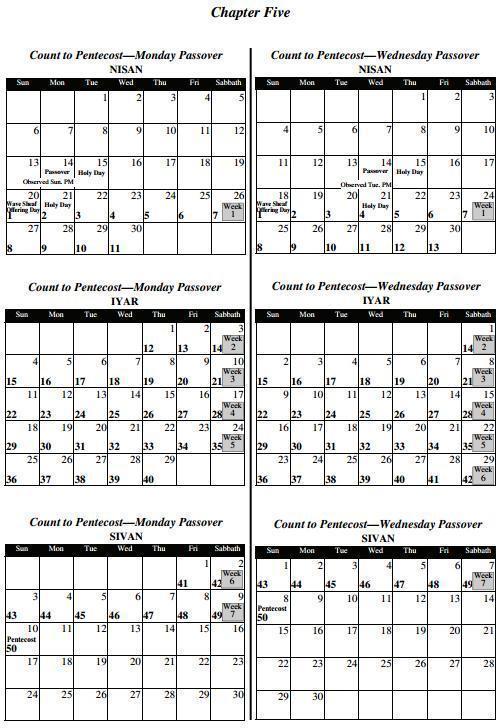
Before He could fulfill the wave sheaf offering, Jesus Christ first had to lay down His life for the sins of all mankind. As the perfect Lamb of God, He fulfilled the Passover sacrifice for all time through His crucifixion and death. In the year of His crucifixion, the Passover day—the 14th of Nisan—was on a Wednesday, in the middle of the week. He died on the Passover day and was put into the tomb just before the Passover day ended and the first day of the Feast of Unleavened Bread—Nisan 15—began. He remained in the tomb for three days and three nights. As the weekly Sabbath was ending at sunset, He was resurrected from the dead. Early on the following morning—the day after the weekly Sabbath during the Feast of Unleavened Bread—He appeared to Mary Magdalene. Later that morning, He ascended into heaven to God the Father to be accepted as the first of the firstfruits. That day was the Wave Sheaf Day—the first day of the week during the Feast of Unleavened Bread. The following New Testament passages record the prophesied fulfillment of the Passover and the Feast of Unleavened Bread by Jesus Christ:
- Jesus Christ is the “Lamb of God which takes away the sin of the world” (John 1:29; I John 2:1-2).
- “Christ our Passover was sacrificed for us” (I Cor. 5:7).
- We “are unleavened” in Christ because He takes away our sins (I Cor. 5:7).
- We are commanded to keep the Feast of Unleavened Bread because Christ our Passover was sacrificed for us! “Therefore, let us keep the Feast of Unleavened Bread, not with the old leaven, neither with the leaven of malice and wickedness, but with the unleavened bread of sincerity and truth” (I Cor. 5:8).
- Jesus Christ is the Bread of Life from heaven (John 6:35-58). Since He is the sinless offering of God, to eat that Bread of Life is to partake of the “unleavenedness” of Jesus Christ. We symbolically eat His flesh by eating unleavened bread for the Passover and each day during the seven days of the Feast of Unleavened Bread.
- Jesus was crucified as our Passover sacrifice on the Passover day (Luke 22:8-16). He died and was buried for three complete days and three complete nights (Matt. 12:39-40). Because Christ was raised from the dead, we are able to stand before God the Father in a “sinless, unleavened” condition through the gift of righteousness by His grace (Rom. 5:17; I Cor. 15:12-20).
- Jesus Christ was resurrected as the weekly Sabbath was ending at sunset and was accepted by God the Father on the morning of the first day of the week during the Feast of Unleavened Bread. On the Wave Sheaf Day, “the morrow after the Sabbath,” Jesus Christ ascended to God the Father and was accepted as the first of the firstfruits, the ultimate fulfillment of the wave sheaf offering (John 20:17-19; I Cor. 15:20; Lev. 23:10-11).
The divinely-planned fulfillment of the Passover and the Feast of Unleavened Bread by Jesus Christ makes it absolutely clear why God commanded that the wave sheaf be offered during the Feast of Unleavened Bread. The wave sheaf is inseparably linked with the Passover and the Feast of Unleavened Bread through the death of Jesus Christ as our Passover and His acceptance by God the Father as the first of the firstfruits on the Wave Sheaf Day. The apostle Paul emphatically commands us to keep the Feast of Unleavened Bread because “Christ our Passover is sacrificed for us.” He has power to take away our sins and give us eternal life because He was accepted as the living Wave Sheaf, the first of the firstfruits raised from the dead during the Feast of Unleavened Bread.
Those who place the Wave Sheaf Day outside the Feast of Unleavened Bread are ignoring its original prophetic meaning and its vital spiritual fulfillment by Jesus Christ. The scriptural instructions for the offering of the wave sheaf were specifically given by God to ensure that the Wave Sheaf Day always falls on the first day of the week during the Feast of Unleavened Bread. When we accept this biblical truth, we are acknowledging the true Wave Sheaf, Jesus Christ, Who ascended to God the Father and was accepted on that day. No other day can commemorate His fulfillment of the offering of the wave sheaf.
Some Christians have not understood this truth because they were taught that the Wave Sheaf Day must follow the weekly Sabbath which falls during the Feast of Unleavened Bread. This teaching is based on the Jewish view of God’s instructions—a view which does not recognize the true Passover day, Nisan 14, as having any bearing on the Wave Sheaf Day. Since the Jews ignore the significance of Nisan 14, they exclude the weekly Sabbath which may fall on this day from their determination of the wave sheaf. This method of determining the Wave Sheaf Day is a denial of God’s original Passover commands, which are clearly recorded in Scripture.
Rejecting the true Passover day, modern Jews observe their Passover exclusively on Nisan 15—the first day of the Feast of Unleavened Bread. But it has not always been so. The New Testament reveals that in the days of Jesus’ ministry on earth, many Jews in Judea and Galilee were observing the Passover on Nisan 14, as God had commanded. At that time in history, the original Passover day—Nisan 14— was openly recognized by the Jews as part of the entire eight-day festival of unleavened bread. As we will see in the following chapter, Nisan 14 is referred to in the Gospels as “the first of the unleaveneds.” A study of these Gospel records will verify that Nisan 14—the true Passover day—should not be excluded in determining the Wave Sheaf Day.
CHAPTER THREE
What the Gospel Records Reveal About “the Unleaveneds”
We know from the commands of God in the Old Testament that the Passover day is the 14th day of the first month, called Abib or Nisan. We also know that the 15th day of the first month is the first day of the Feast of Unleavened Bread. There is no question concerning the proper sequence of these days as recorded in Leviticus 23:5-6.
The account of the original Passover in the book of Exodus makes it clear that the Passover was both killed and eaten on the 14th day of the month. God commanded the children of Israel to kill the Passover lambs on the 14th at ben ha arbayim, or “between the two evenings” (Ex. 12:6). Other passages make it absolutely clear that this Hebrew term refers to the beginning of the 14th—after ba erev, or the sunset of the 13th. The lambs were roasted and eaten that same night, and any remains were burned before the morning of the 14th day. The Scriptures leave no doubt about the proper time for killing and eating the Passover lambs. (See The Christian Passover by Fred R. Coulter, pp. 31-89.)
In the Gospel accounts of Jesus Christ’s last Passover observance with His apostles, we are given additional information about the Passover day. In these passages, there are some verses pertaining to the observance of the Passover and the sacrifice of the Passover lambs which are difficult to understand. These verses have caused much confusion in the minds of Bible students and scholars due to the manner in which they have been translated. Most translations of the Bible, including the KJV, do not translate these verses correctly.
One verse which has caused much confusion is Matthew 26:17. In the KJV, as in most other translations, this verse is translated as follows: “Now the first day of the feast of unleavened bread the disciples came to Jesus, saying unto Him, ‘Where will You that we prepare for You to eat the Passover?’ ”
Notice that the words “day” and “feast of” in this verse are italicized. The use of italic letters in the KJV indicates that these words are not found in the original Greek text. Such italicized words have been inserted by the translators in an effort to clarify the meaning of the text. In some cases, these additions are helpful. However, in this verse, the inserted words cause confusion because they alter the true meaning.
The words which have been inserted in this verse indicate that it was the first day of the Feast of Unleavened Bread when the disciples asked Jesus where they should prepare the Passover. If this translation were correct, the disciples would have been nearly two days late when they asked Jesus this question. We know that the first day of the Feast of Unleavened Bread is the 15th day of the first month, following the Passover day on the 14th. From the context of the verse, it was apparently late in the day when the disciples asked Jesus where they should prepare the Passover. If that day was actually the 15th, the first day of the Feast of Unleavened Bread, then we are confronted with serious problems:
1) If they had killed the lamb late on the 15th, the first day of the Feast of Unleavened Bread, Jesus and His disciples would consequently have eaten the Passover lamb on the night of the 16th, the second day of the feast. That would mean that Jesus did not keep the Passover on the 14th, as commanded by God. If Jesus had not kept the Passover on the correct day, in the correct manner, He would have sinned.
2) If Jesus had eaten the Passover on the night of the 16th, He would have been crucified on the 16th, the second day of the Feast of Unleavened Bread. Jesus could not have been our Passover sacrifice, because He would not have been crucified on the Passover day, the 14th day of the first month!
3) The priests and religious leaders, who ate their Passover the night after Jesus and the disciples did, would consequently have killed their lambs late on the day portion of the 16th and would have eaten their Passover on the night of the 17th. This sequence would place their Passover on the third day of the Feast of Unleavened Bread.
THIS IMAGINARY SCENARIO COULD NOT POSSIBLY BE TRUE! We can be absolutely positive that Jesus and His disciples did not keep the Passover in the manner just described. Nor did the Jews keep their Passover in this manner. Such an unworkable scenario exposes the folly of this mistranslation. The same holds true for the parallel accounts in Mark and Luke.
In Mark 14:12 we have a similar problem, but the wording is somewhat different from Matthew 26:17. Here is Mark’s account: “And the first day of unleavened bread, when they killed the Passover, His disciples said unto Him, ‘Where will You that we go and prepare that You may eat the Passover?’ ” (KJV). In this case, the translators did not insert the words “the feast of” before “unleavened bread.” Nevertheless, this translation still gives the impression that the day they killed the lamb was the first day of the Feast of Unleavened Bread. Again, we have the same problems as outlined above.
When we examine Luke’s account, we find similar wording. Luke 22:7: “Then came the day of unleavened bread, when the Passover must be killed” (KJV).
If this verse actually means that the lambs were killed on the 15th, the first day of the Feast of Unleavened Bread, then no one would have eaten the Passover until the 16th. Obviously that cannot be the meaning in this account by Luke, or in the parallel accounts by Matthew and Mark.
What Is the True Meaning of These Gospel Accounts?
In order to find the answer, we must understand the original Greek words that were used by the Gospel writers. Let’s begin with Matthew 26:17: “Now the first day of the feast of unleavened bread...” (KJV). Remember, the italicized words day and feast of do not appear in the original text. They were added because the translators apparently felt that the exact meaning of the Greek was difficult to understand and needed to be clarified. Unfortunately, their attempt at clarification actually resulted in additional confusion.
Spelled in English, the original Greek of this passage would read: “Tee de protee toon azumoon....” Literally translated, it reads: “Now on the first of the unleaveneds....”
What does this phrase “the first of the unleaveneds” mean? As we have seen, the context of the verse conclusively shows that it cannot mean the first day of the Feast of Unleavened Bread. Furthermore, we have seen that the Greek text does not support the translation, “the first day of the feast of unleavened bread,” as found in the KJV, etc.
The term toon azumoon, “the unleaveneds,” is the plural of ta azuma, which means “the unleavened.” By implication, ta azuma, “the unleavened,” includes the meaning of the word “bread.” After all, it is bread which is leavened or unleavened. However, the plural form, toon azumoon, “the unleaveneds,” includes more than the seven days of the Feast of Unleavened Bread.
Let’s examine the scriptural instructions for observing the Feast of Unleavened Bread, from the 15th day of the month through the 21st day. These commands of God will help us understand why the term “the unleaveneds” includes the Passover day itself, and does not exclusively mean the seven-day Feast of Unleavened Bread. Here are the commands that God gave to the children of Israel:
- Before the first day of the Feast of Unleavened Bread, all leaven and leavened bread was to have been put out of their homes (Ex. 12:15, 19). Verse 15 should have been translated, “shall have put out leaven.” The JPSA translation is “shall put away,” but the Hebrew text uses the past tense. This tense shows a completed action—before the first day of the Feast of Unleavened Bread. Even as it is practiced today, cleaning the home and removing leaven may have begun several days before the Passover day and the first day of the Feast of Unleavened Bread. All leaven had to be completely removed before the beginning of the 15th day of the first month. Thus the 14th of Nisan—the Passover day—was the first day that the houses became completely unleavened.
- No leaven was to be found in their houses during the seven days of the Feast of Unleavened Bread (Ex. 12:19).
- They were not to have any leaven or leavened bread within any of their borders, which included the entire country (Ex. 13:7).
- On the Passover day and during the seven days of the Feast of Unleavened Bread, unleavened bread was commanded to be eaten (Ex. 12:8, 15; 13:6; Lev. 23:6).
The Scriptures make it clear that the Passover day, the 14th day of the first month, was the day of entering a completely unleavened state and eating the first unleavened bread, beginning with the Passover meal. In the New Testament, the Passover day is specifically designated by Matthew, Mark and Luke as “the first day of the unleaveneds.”
By including the Passover day as a separate day of “unleavenedness” in addition to the seven days of the Feast of Unleavened Bread, the Gospel writers were following the common practice of that time. The “first of the unleaveneds” did not refer to the first day of the Feast of Unleavened Bread, Nisan 15. Rather, as we will see, it refers to the Passover day itself. It is an acknowledged fact that in these biblical passages “the corresponding Greek has no word for ‘feast,’ and speaks only of the ‘first of the unleavened bread’—a common expression for the Jewish 14th with practically all first century writers” (Amadon, “The Crucifixion Calendar,” Journal of Biblical Literature, Vol. LXIII, 1944, p. 189).
Additionally, when we study the procedures that the Jews followed in putting out leaven, it is easy to understand why the Passover day was designated as “the first day of the unleaveneds.” The common Jewish practice was to burn all leaven by 10 AM on the morning of the 14th. This practice may have been passed down from the time of the original Passover in Egypt, as no leavened bread was baked on the Passover day. The book of Exodus records that the children of Israel carried only unleavened bread as they left their houses on the day portion of Nisan 14, the Passover day (Ex. 12:39). They had bound their dough in their kneading troughs, which kept the dough from being exposed to the air so that it could not be leavened by natural fermentation (Ex. 12:34).
As we examine the Scriptures in Exodus 12, there is no record of eating any leavened bread during any part of the first Passover day. Furthermore, it is specifically recorded that they ate only unleavened bread for the Passover on the night of the 14th. Since they left their houses at the crack of dawn and took only unleavened bread with them, they could only have eaten unleavened bread on the day portion of the Passover day. While God’s commands did not expressly forbid the eating of leavened bread on the 14th, the events which took place on that first Passover day allowed only unleavened bread to be eaten. So by practice, the first Passover was “an unleavened bread” day.
It is clear that the 14th day of the first month was historically an entire day of eating unleavened bread. There is no indication that leavened bread was eaten at any time during the first Passover day. Although by New Testament times some Jews no longer observed the 14th as the Passover, they understood that Nisan 14 was “the first day of the unleaveneds”—because on the morning of that day they entered a state of “unleavenedness” by removing and destroying all remaining leaven from their homes.
The procedures which were followed for collecting and removing leaven are described in the writings of the Jews. These procedures were the common practice in New Testament times, and clearly illustrate why Nisan 14 was referred to as “the first of the unleaveneds.”
The Practice of Removing Leaven
In order to “de-leaven” an entire nation, a great deal of preparation was required. To remove all leavening agents and all leavened bread from every household and every business in the city of Jerusalem and the entire nation of Judea was a mammoth undertaking. Not only did all leaven have to be removed, but unleavened bread had to be prepared for every household.
The Mishnah and other rabbinical writings are the only historical records which describe the removal of leaven and the baking of unleavened bread. While these descriptions are related to a temple-centered 15th Passover observance, these same procedures were also followed by those who ate the 14th Passover, with some variation in timing. As documented in the book The Christian Passover, the majority of the Jews of New Testament times kept a domestically-observed Passover at the beginning of the 14th day of the first month—Nisan 14. As we have seen, that day was commonly known as “the first day of the unleaveneds.” Although leaven was not completely removed from every house until Nisan 14, the following records reveal that leaven was primarily collected on the preceding day:
“The 13th of Nisan. On the evening of the 13th, which, until that of the 14th, was called the ‘preparation of the Passover’ [John 19:14], every head of a family searched for and collected by the light of a candle all the leaven. Before beginning the search he pronounced the following benediction: ‘Blessed art Thou, O Lord our God, King of the universe, who hast sanctified us with Thy commandments, and hast enjoined us to remove the leaven.’ After the search he said, ‘Whatever leaven remains in my possession which I cannot see, behold, it is null, and accounted as the dust of the earth’ ” (Unger’s Bible Dictionary, “Festivals,” p. 354).
The rabbinical writings reveal that the Jews burned all leaven by 10 AM on the morning of the 14th. No one was to eat leavened bread after 11 AM on the 14th. Unleavened bread was baked and was ready by 3 PM for those Jews who ate their temple-sacrificed Passover on the 15th. Those Jews who observed the domestic Passover at the beginning of the 14th, as commanded by God, followed the same procedures on the 13th—a day earlier—so that by the time Nisan 14 arrived at sunset, all leaven would be removed and unleavened bread would be baked for the domestic Passover. Regardless of which Passover the Jews observed, the 14th of Nisan was known to them all as “the first day of the unleaveneds.”
The fact that “the first of the unleaveneds” refers to the 14th, the Passover day, and not to the first day of the Feast of Unleavened Bread, is unmistakably evident when we read the Gospel accounts of Jesus’ last Passover. Let’s take another look at Matthew’s account. “Now on the first of the unleaveneds [the first day requiring unleavened bread, so that the Passover could be eaten], the disciples came to Jesus, saying, ‘Where do You desire that we prepare for You to eat the Passover?’ ” (Matt. 26:17).
A correct understanding of the terminology used in this verse and in the parallel accounts in Mark and Luke puts an end to the confusion caused by wrong translations. The problem is solved by studying the original Greek words and by letting the Scriptures interpret the Scriptures. By applying these rules for Bible study, we know that “the first of the unleaveneds” can only mean the Passover day—Nisan 14. That is the day in which Jesus and the disciples ate the Passover—at the beginning of the 14th. The Gospel writers were clearly referring to this day. As has been said, “Truth agrees with truth, but error does not agree with truth.
When we examine Luke’s account, we find that he gives some additional insight: “Then came the day of the unleaveneds in which it was obligatory to kill the Passover lambs” (Luke 22:7). Luke specifically calls the day “the day of the unleaveneds.” Luke then tells us that this day was specified for killing the Passover lambs which were to be eaten for the domestically-observed Passover at the beginning of Nisan 14. When the definite article the is used in the Greek text, the meaning is stronger and more emphatic. The fact that Luke uses the definite article in this verse places stronger emphasis on this particular day as “the day of the unleaveneds,” which was expressly designated as the day for killing the lambs for the domestic Passover.
The KJV translates the latter part of this verse, “when the Passover must be killed”—but the author has more accurately translated it “in which it was obligatory to kill the Passover lambs.” The Greek word translated “obligatory” is dei, which means “mandatory, compulsory, obligatory, one must, or has to, is required to, compulsion of duty, and compulsion of law” (Arndt and Gingrich, A Greek-English Lexicon of the New Testament). In Luke 22:7, the express meaning of dei is “under compulsion of law.” In other words, Luke is showing us that the killing of the Passover lambs was required by compulsion of the law to be completed at that express time. We know that the time commanded by God in Exodus 12 for the killing of the lambs was ben ha arbayim, or “between the two evenings”—the beginning of the 14just after the sun had set. That was the obligatory time when the lambs were to be killed according to God’s law.
According to God’s instructions in Exodus 12, the lambs were to be kept until the 14th day of the first month. The specific point at which the 14th began was at sunset, or ba erev, on the 13th. We can therefore conclude that the time Luke was writing about was at the beginning of the 14th day, immediately after the sun had set, when Jesus’ disciples asked Him where they should prepare the Passover meal. The Greek words used in Luke’s account show that the expression “the day of the unleaveneds” is specifically referring to the 14th day of the first month, which was the day commanded by God for killing the Passover lambs. This fact is further verified by Mark’s account of Jesus last Passover in his Gospel, which we will examine in the following chapter.
CHAPTER FOUR
Jesus’ Last Passover Was “On the First Day of the Unleaveneds”
The parallel account of Jesus’ last Passover as recorded in the Gospel of Mark makes it clear that the Passover day, Nisan 14, was recognized as “the first day of the unleaveneds.” In Mark 14:12 we read, “And on the first day of the unleaveneds....” This is a literal translation of the Greek. As we have learned, “the first day of the unleaveneds” is not a phrase designating the first day of the Feast of Unleavened Bread, Nisan 15, but specifically refers to the Passover day, Nisan 14, in which all leaven was removed and the first unleavened bread was eaten.
As did Luke in his Gospel, Mark also tells us that this was the day that the Passover lambs were killed. Continuing in Mark 14:12 in the KJV, the next phrase reads, “when they killed the Passover....” The words “they killed” are translated from the Greek verb ethuon. The specific meaning of this word is most revealing. As a verb, ethuon reflects the following case and action: third person plural—they; imperfect tense—meaning an action not yet completed, but taking place at that very moment—were killing; active indicative—being done personally at that moment by the subject—they. A literal translation of the Greek text would be as follows: “And on the first day of the unleaveneds, when they were killing the Passover lambs....”
It is critical to note that Mark’s inspired words as preserved in the Greek text show that the Passover lambs were being killed at that very moment as Jesus sent His disciples into Jerusalem.
Mark was a Levite. Therefore, his testimony becomes ironclad, with no room for variation. He fully understood on which day and at what time the Passover lambs had to be killed for the domestic Passover.
The word “they” in this verse can only refer to those who were killing the Passover lambs at that precise moment on Nisan 14, at the beginning of the day, just after sunset. “They” could not possibly be referring to the priests at the temple, because the temple-sacrificed Passover lambs were not slain until the next afternoon—late on the 14th. The only logical conclusion is that “they” refers to those who were killing the Passover lambs at houses or inns where the domestic Passover would be kept. The lambs were being killed at the beginning of the 14th according to the statutes and ordinances of Exodus 12. This was the exact moment that Jesus sent His disciples into Jerusalem to prepare the Passover—“when they were killing the Passover lambs....”
Properly translated, this verse in the Gospel of Mark has profound meaning. When Mark’s account is combined with Luke’s account, the impact is even greater. Here are Mark 14:12 and Luke 22:7 combined in a literal translation: “On the first day of the unleaveneds, in which it was obligatory to kill the Passover lambs, when they were killing the Passover, His disciples asked Him, ‘Where do You desire that we should go and prepare the Passover that You may eat?’ ”
Furthermore, these verses in the Gospels of Mark and Luke clearly show that the domestic Passover was a common practice. It is also apparent in these accounts that the disciples were accustomed to keeping the domestic Passover, as indicated by their question, “Where do You desire that we should go and prepare the Passover that You may eat?” Apparently, Jesus had not previously instructed His disciples to make arrangements for the Passover. They knew that it would soon be time to eat the Passover, but they did not know where Jesus wanted them to make the necessary preparations. Since the killing of the domestic Passover lambs was happening before their very eyes, the disciples asked this urgent question, “Where do You desire that we go and prepare the Passover so that You may eat?” What was Jesus’ answer in these Gospel accounts?
Jesus did not command Peter and John to go to the temple to sacrifice a Passover lamb. His command was to follow a certain man to a certain house and to prepare the Passover at that house. Nothing could be clearer!
When we examine all three Gospel records of Jesus’ instructions to His disciples, it is obvious that Jesus kept the domestic Passover on the 14th—“the first day of the unleaveneds.”
Matthew’s account: “Now on the first of the unleaveneds, the disciples came to Jesus, saying to Him, ‘Where do You desire that we prepare for You to eat the Passover?’ And He said, ‘Go into the city to such a man, and say to him, “The Teacher says, ‘My time is near; I will keep the Passover with My disciples at your house.’ ” ’ Then the disciples did as Jesus had directed them, and prepared the Passover” (Matt. 26:17-19).
Mark’s Account: “And on the first day of the unleaveneds, when they were killing the Passover lambs, His disciples said to Him, ‘Where do You desire that we go and prepare, so that You may eat the Passover?’ And He sent two of His disciples, and said to them, ‘Go into the city, and you shall meet a man carrying a pitcher of water; follow him. And whatever house he shall enter, say to the master of the house that the Teacher says, “Where is the guest chamber, where I may eat the Passover with My disciples?” And he shall show you a large upper room, furnished and ready. There prepare for us.’ And His disciples went away: and when they came into the city, they found it exactly as He had said to them; and they prepared the Passover” (Mark 14:12-16).
Luke’s Account: “Then came the day of the unleaveneds in which it was obligatory to kill the Passover lambs. And He sent Peter and John, saying, ‘Go and prepare the Passover for us that we may eat.’ But they said to Him, ‘Where do You desire that we prepare it?’ And He said to them, ‘Watch, and when you come into the city, you will meet a man carrying a pitcher of water; follow him into the house that he enters; and you shall say to the master of the house, “The Teacher says to you, ‘Where is the guest chamber, where I may eat the Passover with My disciples?’ ” And he shall show you a large upper room furnished; there prepare’ ” (Luke 22:7-13).
Jesus’ own words to His disciples are overwhelming evidence that “the first day of the unleaveneds” was, in fact, the Passover day— not the first day of the Feast of Unleavened Bread. Moreover, the context of these Scriptures proves it was the domestic 14th Passover. The word “Passover” is used 11 times in these three accounts; “the house” is mentioned three times. Not once is the temple mentioned, nor is a temple-killed Passover lamb remotely indicated in these accounts. There can be no doubt that Jesus kept the domestic Passover on the 14th day of the first month, as commanded in Exodus 12.
The Gospel accounts do not specify whether the disciples’ preparations included the killing of the Passover lamb. It is possible that Peter and John killed the lamb themselves. However, since everything was “furnished and ready,” it is more likely that the master of the house had already killed the lamb by the time Peter and John arrived. In that case, they would have begun roasting the lamb and setting out the other foods for the meal, making sure that the unleavened bread and wine were ready. They completed whatever was necessary to prepare the Passover meal. Luke records, “Then they went and found everything exactly as He had said to them; and they prepared the Passover” (Luke 22:13).
The Gospel records leave no doubt that Jesus and the apostles kept the domestic Passover on the 14th of Nisan. This is the day called “the first day of the unleaveneds” by Matthew, Mark and Luke. At the time of Jesus’ last Passover, the 14th day of the first month was commonly known to all Jews as “the first day of the unleaveneds.” Even those Jews who kept the 15th Passover recognized Nisan 14 as the beginning of “the unleaveneds”—because all leaven was removed by the morning of the 14th, and unleavened bread was prepared and eaten on that day. The practice of that time forbade any Jew to eat leavened bread after 11 AM on the morning of the 14th. Therefore, even those Jews who did not eat the Passover meal on the night of the 14th were required to eat only unleavened bread during the day portion of the 14th.
There is no question that in New Testament times the Jews acknowledged the original Passover day—Nisan 14—as “the first of the unleaveneds.” Yet in the centuries that followed, the original significance of Nisan 14 was altogether lost. While in New Testament times the domestic 14th Passover was apparently the predominant practice, it was ultimately replaced by the temple-centered 15th Passover. Modern Jews observe solely a 15th Passover and view the 14th of Nisan only as a preparation day for their traditional Seder meal on the 15th—the first day of the Feast of Unleavened Bread. By replacing the 14th Passover with a traditional Seder meal at the beginning of the 15th, the Jews have shortened the original eight-day festival to only a seven-day observance. These seven days of unleavened bread are now known to Jews as “Passover,” rather than as the Feast of Unleavened Bread. Josephus, who wrote his Jewish histories over a period of many years, has recorded this transition from the original eight-day festival of “the unleaveneds” to the shorter Jewish observance of seven days.
Josephus Documents the Change From the Eight-Day Festival to a Seven-Day Observance
The transition from a biblical eight-day festival to a Jewish seven-day observance is documented in Josephus’ contrasting descriptions of the Passover and the Feast of Unleavened Bread as they were observed during his lifetime. Josephus shows that there was a change from the original designation of two separate feasts, totaling eight days, to only a seven-day festival. He also shows that the use of unleavened bread was mandatory for the Passover day, as well as for the seven days of the Feast of Unleavened Bread. His narration is most revealing:
“But when the fourteenth day was come, and all were ready to depart, they offered the sacrifice, and purified their houses with the blood, using a bunch of hyssop for that purpose; and when they had supped, they burnt the remainder of the flesh, as just ready to depart. Whence it is that we do still offer this sacrifice in like manner to this day, and call this festival Pascha, which signifies the feast of the passover, because on that day God passed us over, and sent the plague upon the Egyptians; for the destruction of the first-born came upon the Egyptians that night...” (Antiquities of the Jews, Bk. 11, Ch. XIV, Sec. 6).
In this narration based on Exodus 12, Josephus clearly depicts the 14th of Nisan as commemorating the event of God’s passing over the houses of the children of Israel in Egypt. He calls this commemorative observance the festival of “Pascha,” or Passover. He does not call the Feast of Unleavened Bread the “Passover” at this point. In the next section of his exposition, after his narration of the Exodus itself, we find this statement about the entire eight days: “Whence it is that, in memory of the want we were in, we keep a feast for eight days, which is called the feast of unleavened bread” (Ibid., Ch. XV, Sec. 1). Here, he relates that the Passover day was included with the seven days of the Feast of Unleavened Bread as one of “the unleaveneds.” By relating that there were eight days of unleavened bread, Josephus was not attempting to promote a new practice that was contrary to the Scriptures. Instead, Josephus was relating that the first Passover, as recorded in Exodus 12, was in fact an additional day of unleavened bread.
These two accounts by Josephus clearly show that the Passover and the Feast of Unleavened Bread were originally understood to be separate feasts with separate meanings. Unleavened bread was required for both feasts, which together totaled eight days. However, Josephus’ later accounts show that this original distinction was beginning to be blurred, as reflected by a change in terminology and designation. The following narration depicts the Passover and the Feast of Unleavened Bread as a combined observance: “Now, upon the approach of that feast of unleavened bread, which the law of their fathers had appointed for the Jews at this time, which feast is called Passover, and is a memorial of their deliverance out of Egypt...” (Ibid., Bk. XVII, Ch. IX, Sec. 3; bold emphasis added).
Recounting the same event in Wars of The Jews, Josephus again records this change in terminology: “And indeed, at the feast of unleavened bread, which was now at hand, and is called by the Jews the Passover...” (Bk. II, Ch. I, Sec. 3; bold emphasis added).
By this time, the Jews were calling the seven-day Feast of Unleavened Bread “the Passover.” Josephus’ writings clearly demonstrate this change in the name of the festival. When Josephus wrote this account in 90 AD, the Feast of Unleavened Bread was commonly called “Passover” by the Jews. The meaning of the name Passover had shifted from the 14th of Nisan to the following seven-day Feast of Unleavened Bread. As a result, the Jews in succeeding generations lost the knowledge of Nisan 14 as the first of “the unleaveneds.”
The Jews’ rejection of Nisan 14 as the Passover day not only shortened their observance of the festival of “the unleaveneds,” it also profoundly affected the Jewish observance of Pentecost. In the New Testament, we find that the Jews were gathered at Jerusalem to keep the Feast of Pentecost on the same day as were the early Christians—the apostles and disciples of Jesus Christ (Acts 2:1-11). This observance of Pentecost clearly shows that both Christians and Jews had counted from the same Wave Sheaf Day. At that time, the majority of the Jews still acknowledged Nisan 14 as “the first of the unleaveneds.” Later, the Jews forsook the true Passover Day, no longer observing Nisan 14 as a commanded feast day, and consequently they ceased to reckon Nisan 14 as one of “the unleaveneds.” This failure to observe the true Passover resulted in eliminating Nisan 14 as a day to be included in determining the Wave Sheaf Day. The various Jewish sects began to follow different interpretations of God’s command for the wave sheaf, which led to the setting of a number of different dates for the Wave Sheaf Day and consequently for the observance of Pentecost.
Some of these Jewish sects placed the Wave Sheaf Day on a fixed date, claiming that “the morrow after the Sabbath” meant the day after the first or last annual Sabbath of the Feast of Unleavened Bread. Those Jews who based their count on Nisan 21—the last annual Sabbath, or holy day—always observed their Wave Sheaf Day after the Feast of Unleavened Bread. Those Jews who based their count on Nisan 15—the first holy day—always observed their Wave Sheaf Day during the Feast of Unleavened Bread, but they did not observe it on the first day of the week unless Nisan 15 happened to fall on a weekly Sabbath. Neither of these Jewish interpretations is in accord with the Scriptures, which reveal that the Wave Sheaf Day—“the day after the Sabbath”—is always the first day of the week during the Feast of Unleavened Bread.
In most years, the weekly Sabbath which precedes the Wave Sheaf Day will also fall during the seven-day Feast of Unleavened Bread. However, in years when the last day of the Feast of Unleavened Bread, Nisan 21, falls on a weekly Sabbath, it cannot be used to determine the Wave Sheaf Day. In such years, it is the preceding weekly Sabbath—Nisan 14, the Passover day, “the first of the unleaveneds”— which must be used to determine the Wave Sheaf Day. The biblical commands in Leviticus 23 and their original fulfillment in Joshua five make it clear that in these years the Wave Sheaf Day will be “the day after the Passover.” In the following chapter, we will see that in such years the Passover day is for Christians today “the first of the unleaveneds”—as it was in every year for both Christians and Jews in early New Testament times.
CHAPTER FIVE
When the Wave Sheaf Day Is “The Morrow After the Passover”
The book of Joshua records the fulfillment of the first Wave Sheaf Day by the children of Israel following their first Passover after entering the Promised Land. In Joshua five we read, “And the children of Israel camped in Gilgal and kept the Passover on the fourteenth day of the month at evening in the plains of Jericho. And they ate of the old grain of the land on the next day after the Passover, unleavened cakes and roasted new grain in the same day. And the manna stopped on the next day after they had eaten the grain of the land. And there was no more manna for the children of Israel, but they ate the fruit of the land of Canaan that year” (verses 10-12).
This account is most significant. According to God’s command in the book of Leviticus, the children of Israel were forbidden to eat any grain that grew in the promised land until they had offered the wave sheaf. God had specifically commanded, “Speak to the children of Israel and say to them, ‘When you have come into the land which I give to you, and shall reap the harvest of it, then you shall bring the premier sheaf of the firstfruits of your harvest to the priest. And he shall wave the sheaf before the LORD to be accepted for you. On the next day after the Sabbath the priest shall wave it.... And you shall eat neither bread, nor parched grain, nor green ears until the same day, until you have brought an offering to your God. It shall be a statute forever throughout your generations in all your dwellings’ ” (Lev. 23:10-11, 14).
Thus, when Joshua tells us that the children of Israel ate “of the old grain of the land on the next day after the Passover, unleavened cakes and roasted new grain in the same day,” this means that the day after the Passover was the Wave Sheaf Day. (For a full explanation of the original fulfillment of the wave sheaf, see Understanding God’s Command for the Wave Sheaf by Dwight Blevins.)
Since the Wave Sheaf Day is always “the morrow after the Sabbath,” it is obvious that the Passover day in Joshua five— Israel’s first Passover in the promised land—fell on a weekly Sabbath. Joshua’s account clearly demonstrates that when the Passover day falls on a weekly Sabbath, it is that weekly Sabbath which determines the Wave Sheaf Day. In such years, the only weekly Sabbath during the Feast of Unleavened Bread falls on the last holy day—Nisan 21. Using the last weekly Sabbath to determine the Wave Sheaf Day would place the day outside the Feast of Unleavened Bread, on Nisan 22—thus nullifying the significance of the wave sheaf in relation to the Passover and the Feast of Unleavened Bread.
As we have seen in Joshua five, it is contrary to Scripture to place the Wave Sheaf Day outside the Feast of Unleavened Bread. The original fulfillment of the wave sheaf in the Old Testament, and its ultimate fulfillment by Jesus Christ in the New, make it absolutely clear that the Wave Sheaf Day is always the first day of the week during the Feast of Unleavened Bread. In those years when the Passover falls on a weekly Sabbath, the Wave Sheaf Day—“the next day after the Sabbath”—will always be the first day of the Feast of Unleavened Bread— Nisan 15. When the Passover falls on a weekly Sabbath, Nisan 15 is the only first day of the week within the Feast of Unleavened Bread. In such years, the Passover day—Nisan 14—is a full day of “unleavenedness” because of the demands of the Sabbath commandment that no work be done.
To fulfill the requirements of the Fourth Commandment, no work should be done on the weekly Sabbath. Thus, in years when the Passover falls on a weekly Sabbath, all leaven would be removed and destroyed by sunset of the 13th, and unleavened bread would be prepared and baked before the Passover day begins. In such years, the Passover day is, by requirement of law, an additional day of “unleavenedness.” It is truly “the first day of the unleaveneds” in determining the Wave Sheaf Day. When the Passover falls on a weekly Sabbath, it is included in determining “the morrow after the Sabbath”—and the Wave Sheaf Day will always be the first day of the week during the Feast of Unleavened Bread, as the Scriptures command.
Some Rabbis are Beginning to Realize That Nisan 14 is an “Unleavened Bread Day”
In recent years, some rabbis have begun to rethink and reevaluate their traditional view of Nisan 14. Rabbi Shlomo Riskin, dean of Ohr Torah Institutions and chief rabbi of Efrat, Israel, wrote a column in the January 15, 1994, Jerusalem Post entitled “Blood and Redemption.” The article concerns the relationship of Nisan 14 to the paschal lamb sacrifice and to the seven days of unleavened bread called matza: “Nonetheless, nothing can change the fact that a fundamental difference exists between New York [in reference to the entire Diaspora] and Jerusalem—a difference expressed in the very nature of the festival discussed in this week’s portion, Bo [the name of his weekly column].
“What I’m referring to goes beyond the extra Diaspora day at the end of Pessah [Nisan 22]. Surprisingly enough, few people realize that here in Israel we also have an extra day, but it arrives before the start of the festival, the 14th day of Nisan. [The festival starts on the 15th.] Unfortunately, its unique feature is generally overlooked in modern times.
“[T]he Passover sequence ... begins with the command for the Israelites to sacrifice the paschal lamb, which must then be eaten in haste; we are told how God will pass through Egypt and kill every firstborn, and that the blood of the slaughtered lamb is to be placed on the door posts of Israelite homes as a sign for God to spare the inhabitants. Then the Almighty declares: ‘This day shall be for you a memorial, and you shall celebrate it as a festival to God...’ as we’ve quoted above.
“To which day is God referring? At first, [this] sounds as if it refers to the day when the paschal lamb is sacrificed, but as we keep reading, ambiguity surfaces. ‘Eat matza for seven days. By the first day, you must have your homes cleared of all leaven...’ (Ex. 12:15).
“Now it seems that the earlier verse with its reference to the day, ‘You shall remember,’ could actually refer to the entire Pessah festival [the seven days].
“[Rabbi] Rashi concludes that ‘this day of remembering’ refers to the day the Jews left Egypt, the morning after the sacrifice of the paschal lamb, the 15th of Nisan. But the problem with this conclusion is that the 15th of Nisan is the beginning of a seven-day festival, so why is it called ‘this day’ and not ‘these days’?
“In contrast, Rabbi Ibn Ezra says the day which the Torah enjoins us to remember is the 14th, the day before the festival begins. It’s an opinion that can be traced to the school of [Rabbi] Yishmael, whose discussion in the Babylonian Talmud (Pesahim 5a) of the meaning of the verse, ‘but on the first day you shall destroy all the leaven within your homes,’ means that the first day referred to here is actually the 14th, the day before the seven-day festival begins.
“This difference of opinion leads to the speculation that we’re really talking about two festivals, whose distinct characteristics contain a subtle difference for the Israeli [in the land of Israel] and the Diaspora Jewries: The 14th day of Nisan is the one-day festival of the Paschal sacrifice, the paschal lamb (hag haPesah); the 15th commences a seven -day festival of matzot and redemption (hag haMatzot).”
These rabbis are correct in interpreting the phrase “by the first day” in Exodus 12:15 as referring to the 14th day of the first month. They are also correct that the Passover day, Nisan 14, was a separate festival preceding the seven-day Feast of Unleavened Bread—“This day shall be to you for a memorial.” Until the 14th Passover ceased to be observed, Nisan 14 was recognized as an additional day of unleavened bread. During New Testament times, the 14th was commonly called “the first day of the unleaveneds,” as is clearly shown by the Gospel accounts of Matthew, Mark and Luke. For the Jews in Judea in New Testament times, including Jesus Christ and His disciples, Nisan 14 was the first day of eating unleavened bread and the first day of unleavened homes. Even those Jews who observed a 15th Passover ate only unleavened bread after 11 AM on the day portion of Nisan 14. As we have seen in the Jews’ own writings, all leaven was removed and destroyed on the morning of the 14th day of the first month—the Passover Day! That is why Josephus recorded that eight days of unleavened bread were being observed by the Jews during his lifetime.
What Rabbi Riskin wrote further substantiates the biblical evidence that Nisan 14 was originally recognized as “the first day of the unleaveneds.” However, as Rabbi Rashi’s words show, this knowledge was lost to the Diaspora Jews—Jewish exiles who were carried captive into other lands. The Diaspora Jews observe Nisan 22, rather than Nisan 14, as an added festival day. Rabbi Riskin’s article gives us an idea of the differences in practice between the Jews in Palestine and the Jews in the Diaspora. While the Diaspora Jews traditionally observe Nisan 22, the day following the Feast of Unleavened Bread, the Palestinian Jews are beginning to recognize Nisan 14 as an additional day to be observed.
The knowledge that Nisan 14 is the true day of the Paschal lamb would not have been lost to the Jews if they had remained faithful to the Scriptures instead of following the rabbis and their traditions of Judaism. As we have seen, the Jews’ forsaking of the 14th Passover and eliminating it from “the unleaveneds” led to the added error of misinterpreting God’s command for the wave sheaf offering, which resulted in great confusion and division in the Jewish observance of Pentecost. If we, as Christians, do not follow the commands of the Scriptures and the example of Jesus Christ and the apostles, we will also end up in confusion and division.
Jesus and the Apostles Acknowledged
the Passover Day as “The First Day of the Unleaveneds”
During His ministry, Jesus strongly denounced the various Jewish sects because they made void the laws and commandments of God through their traditions. However, we do not find that Jesus ever denounced the observance of the Passover day, Nisan 14, as “the first of the unleaveneds.” On the contrary, the Gospels of Matthew, Mark and Luke all testify that Jesus and the apostles fully accepted and observed the Passover day as “the first day of the unleaveneds.” While this phrase also pertained to the Pharisees and other religious factions of Judaism, the Gospel writers chose the expression because it had meaning for early Christians—and to pointedly show that Nisan 14 was indeed “the first of the unleaveneds.” Even Luke—who wrote his Gospel for Gentile converts—uses this expression, showing that all early Christians recognized Nisan 14 as “the first day of the unleaveneds.” There is not one word in the entire New Testament which condemns the practice of including the Passover day as “the first of the unleaveneds.” Jesus and the disciples openly acknowledged the Passover day as “the first of the unleaveneds” when they ate unleavened bread for the Passover meal on the night of the 14th.
The last Passover that the apostles kept with Jesus was clearly observed on “the first of the unleaveneds,” as recorded by Matthew, Mark and Luke. The Gospel writers were specifically referring to Nisan 14, using a common term which all Christians and Jews of that time understood. When we understand that the Passover day is numbered in Scripture as an unleavened bread day, there is no question that it should be included in determining the Wave Sheaf Day. Including the Passover day in our determination ensures that the Wave Sheaf Day will always fall within the Feast of Unleavened Bread, as the Scriptures require. By following this biblical principle, we will be able to correctly count to Pentecost, and to observe the true fiftieth day—the day that God Himself has made holy and has commanded us to keep.
Concerning the Eating of Leavened Bread on the Passover Day
Understanding that the Passover day was observed by Jesus Christ and the disciples as “the first of the unleaveneds” may lead to questions in the minds of some Christians concerning the eating of leavened bread on the day portion of the Passover day—Nisan 14.
It is clear that in the Old Testament, unleavened bread was commanded to be eaten for the Passover meal on the night of the 14th, but there is no clear command concerning the remainder of the 14th. The commands of God state only that all leaven must be removed and destroyed before the beginning of the 15th. By the commandment of God, there are only seven days in the Feast of Unleavened Bread—not eight. However, the Passover is an additional feast day—which when combined with the seven-day Feast of Unleavened Bread, makes a total of eight days.
It is evident that in New Testament times the Passover day was, by practice, an unleavened bread day, as recorded in Matthew, Mark and Luke. While there is no command in the Old Testament which forbids eating leavened bread on the day portion of the Passover day, it was the common practice in Judea to collect all the leaven on the 13th of Nisan and to destroy the leaven on the morning of the 14th. In view of this practice, it is unlikely that Jesus and the disciples ate any leavened bread during the day portion of the Passover day. While the Gospels do not specifically tell us, it is reasonable to conclude that Jesus and the disciples observed the entirety of Nisan 14 as an unleavened day. Such a practice would be in accord with the first Passover observance in Egypt. The Old Testament records show that only unleavened bread was eaten on the day portion of the first Passover day, the 14th of Nisan.
Today, our practices for the Passover day should be in accord with the New Testament practice observed by Jesus and the apostles, as recorded in the Gospel accounts. Since Jesus did not sin in any way, at any time, Jesus Christ and the apostles were clearly honoring God by observing the Passover day as an additional day of unleavened bread. If they had not observed this practice, the Gospel writers would not have called the Passover day “the first of the unleaveneds.” There is no question that we should follow the example and practice of Jesus Christ and the apostles and observe the Passover day as a separate day of unleavenedness in addition to the Feast of Unleavened Bread.
After understanding what “the first day of the unleaveneds” means, the author cannot personally, in good conscience, eat leavened bread on the day portion of the Passover day after having eaten unleavened bread, symbolizing the broken body of Jesus Christ, in observance of the Passover. “For whatsoever is not of faith is sin” (Rom. 14:23). In light of what is recorded in the Gospels about Nisan 14 as “the first day of the unleaveneds,” the author believes that it is entirely correct to observe the Passover day as a complete day of unleavenedness. This conclusion is not based on the author’s idea, opinion or private doctrine. Rather, it is based upon Old and New Testament Scriptures which show that this was the practice of Jesus and the apostles.
Those who insist on eating leavened bread on the day portion of the 14th should ask: “Is it pleasing to God to eat leavened bread after having eaten unleavened bread during the Passover to symbolize partaking of the broken sinless body of Jesus Christ?”
We Must Do that Which Is Pleasing to God
The teachings of Jesus Christ, as revealed in the New Testament, show that Christians are required to fulfill more than the letter of God’s laws. Jesus made that quite clear when He said, “For I say to you, that unless your righteousness shall exceed the righteousness of the scribes and Pharisees, there is no way that you shall enter into the Kingdom of heaven” (Matt. 5:20). The apostle Paul also said that we “should serve in newness of the spirit, and not in the oldness of the letter” (Rom. 7:6).
Christians, who are under the New Covenant, are required to obey in the spirit, and are commanded to follow the example of Jesus Christ (I Pet. 2:21)—and the apostles as they followed Christ (I Cor. 11:1). What was Jesus’ example? How did He live His life? How did He obey God the Father?
The New Testament clearly shows us Christ’s example. He always did those things which pleased God the Father. Jesus said, “When you have lifted up the Son of man, then you shall know that I AM, and I do nothing from Myself, but as My Father has taught Me, these things I speak. And He who has sent Me is with Me. The Father has not left Me alone, because I am always doing those things which are pleasing to Him” (John 8:28-29).
Jesus Christ revealed that keeping the letter of the law does not satisfy the requirements of the New Covenant. After telling His disciples the parable of the servant who did all that he was commanded to do, Jesus said, “Likewise you also, when you have done all the things that are commanded you, say, ‘We are unprofitable servants, because we have done that which we were obligated to do’ ” (Luke 17:10).
As true Christians, we are required to do more than observe the commandments of God in the letter of the law. If we keep the commandments of God in the letter only, we are “unprofitable servants,” because we have obeyed only that which was commanded. Yes, we may still be the servants of God, but as Jesus said, we are “unprofitable servants.” In order to be more than “unprofitable servants,” we must do and practice the things which are pleasing to God the Father and Jesus Christt, as the apostle John writes: “Beloved, if our hearts do not condemn us, then we have confidence toward God. And whatever we may ask we receive from Him because we keep His commandments and practice those things that are pleasing in His sight” (I John 3:21-22).
© 1995, 2008
Fred R. Coulter
Christian Biblical Church of God P.O. Box 1442
Hollister, CA 95024-1442
All rights reserved. Except for brief excerpts for review purposes, no part of this publication may be reproduced or used in any form or by any means without the written permission of the copyright owner. This includes electronic and mechanical photocopying or recording, as well as the use of information storage and retrieval systems.
Christian Biblical Church of God Offices:
United States
Post Office Box 1442
Hollister, California 95024-1442
Canada
Post Office Box 125
Brockville, Ontario
K6V 5V2 Canada
Australia
GPO 1574
Sydney 2001
Australia
United Kingdom
Post Office Box 8224
Witham CM8 1WZ
United Kingdom
New Zealand
Post Office Box 73
Pokeno 2473
New Zealand
Republic of South Africa
Post Office Box 494
Frankfort 9830
Rep. of South Africa
Iglesia de Dios Cristiana y Bíblica
PO Box 831241
San Antonio, TX 78283